The Quest for Maximum Graft Capacity in Hair Transplantation: Dr. Koray Erdoğan Explains
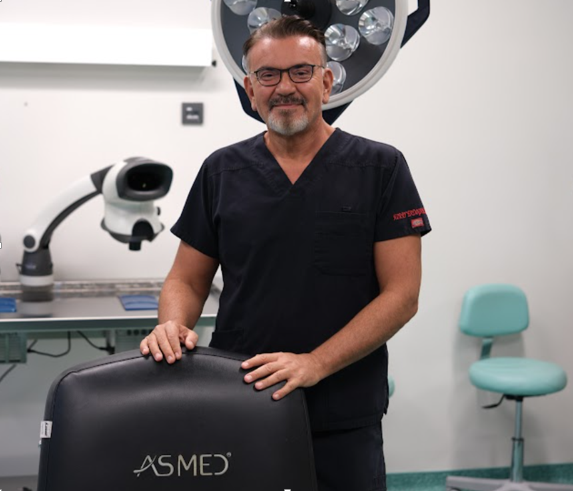
In recent years, hair transplant technology has advanced at an unprecedented pace. Yet despite innovations in automation and robotics, manual extraction continues to be regarded as the gold standard for achieving natural-looking, long-lasting results. According to Dr. Koray Erdoğan (owner and medical director of ASMED Clinic), widely recognized as one of the world’s leading hair transplant surgeons, the success of a hair transplant should never be measured solely by the number of grafts transplanted. Instead, long-term success depends on preserving the donor area through meticulous donor management and scientific planning.
Dr. Erdoğan explains that when the goal is maintaining a natural appearance, preserving donor resources for future procedures, and protecting the donor area for life, manual extraction remains the most sophisticated approach available today.
According to Dr. Erdoğan, successful hair restoration in some advanced cases is achieved not through a single procedure, but through a carefully planned long-term strategy. For patients requiring a high number of grafts, the treatment is divided into multiple sessions to preserve the donor area while maintaining a natural-looking result. A typical approach may involve transplanting approximately 4,000 grafts during the first procedure, followed by two additional sessions of around 3,000 grafts each, allowing the total number of transplanted grafts to exceed 10,000. Dr. Erdoğan notes that, through this staged approach, more than 30 of his patients have successfully undergone hair restoration procedures involving over 10,000 grafts.
Dr. Erdoğan emphasizes that achieving high graft numbers is not dependent on a single technique alone. The combination of Manual FUE, scientific donor management, robotic analysis systems, and Coverage Value calculations enables both the preservation of the donor area and the achievement of successful long-term results.
Preserving the Future of the Donor Area Matters More Than High Graft Numbers
Hair loss is a lifelong, progressive condition. Even patients with excellent hair density today may continue losing hair over the coming decades and eventually require a second or even third transplant.
For this reason, aggressively harvesting the donor area during the first procedure may permanently limit future treatment options.
“A patient’s donor area may appear strong today. But our responsibility extends far beyond today’s surgery—we must plan for the next ten years. That is exactly what donor management is designed to accomplish.” For Dr. Erdoğan, donor management means scientifically selecting grafts in a way that preserves donor density, maintains uniform distribution throughout the donor region, and leaves sufficient reserves for future procedures.
The objective is not simply harvesting more grafts. It is preventing patchiness, visible thinning, and irregular density in the donor area while maintaining its natural appearance for life.
Why Manual Extraction Makes the Difference
Dr. Koray Erdoğan emphasizes that manual extraction is not merely a graft harvesting technique, but a surgical philosophy focused on preserving the donor area. In the Manual FUE approach, each follicular unit is carefully evaluated, and personalized planning is carried out to preserve the long-term capacity and natural appearance of the donor area. This approach represents a strategic hair restoration philosophy that focuses not only on utilizing the existing hair supply but also on considering the patient’s future needs. Although motorized punch systems allow for faster graft harvesting, Dr. Erdoğan believes they cannot match the level of precision offered by manual extraction. With motorized systems, the practical donor capacity is generally limited to around 6,000–7,000 grafts. Through manual extraction, combined with proper planning and donor management, we can safely exceed 10,000 grafts while preserving the natural appearance of the donor area.
Robotic Technology That Supports Natural Hair Restoration
Manual extraction is only one component of ASMED’s comprehensive approach. Developed by Dr. Koray Erdoğan, the clinic’s proprietary robotic analysis system, KE-Bot, performs a microscopic assessment of donor density, hair caliber, and follicular distribution. Coverage Value calculations are then used to determine precisely which areas should contribute grafts and in what quantities, enabling a more strategic and personalized approach to donor management.
This allows harvesting to be evenly distributed across the donor region, preventing overharvesting in any single area while maximizing the patient’s lifetime donor capacity. According to Dr. Erdoğan, this approach preserves the donor area’s natural appearance while enabling the highest possible graft yield.
Coverage Value and the Splitting Technique: The Foundation of Modern Donor Management
One of Dr. Koray Erdoğan’s most significant contributions to the field is the development of the Coverage Value concept, which has been published in international scientific literature.
Rather than evaluating success solely by graft count, Coverage Value measures each graft according to its ability to create visual density. “The important question isn’t simply how many grafts are transplanted. What truly matters is the coverage those grafts provide. Coverage Value helps us identify which grafts will produce the greatest aesthetic benefit.”
This philosophy relies heavily on manual extraction because it enables a technique known as splitting, which cannot be performed with motorized systems. Using splitting, two hairs from a naturally occurring three-hair follicular unit can be harvested while one hair remains in the donor area. This preserves donor density while significantly increasing the number of transplantable grafts.
“By applying the splitting technique, we can harvest two hairs from a three-hair follicular unit while leaving one hair behind. The donor area remains remarkably homogeneous, and this technique simply isn’t possible with motorized extraction.”
KE-Bot’s AI-assisted robotic mapping also identifies the finest hair follicles under microscopic analysis, allowing them to be strategically placed at shallow angles to create exceptionally natural hairlines.
Importantly, no implanter pens are used during implantation in ASMED. Instead, grafts are placed using K.E.E.P. (Koray Erdoğan Embedding Placer) , another proprietary instrument developed by Dr. Erdoğan to maximize precision and graft survival.
By combining mathematical planning with advanced surgical execution, ASMED Clinic has earned recognition as one of the world’s leading hair transplant centers.
Why Planning for Future Procedures Is Essential
Many patients mistakenly believe that hair transplantation is a one-time, permanent solution. According to Dr. Erdoğan, nearly 90% of patients arrive expecting exactly that.
In reality, hair loss continues throughout life, meaning many patients will eventually require additional procedures.
Patients often ask: “I had a hair transplant seven years ago and now my hair has thinned again. Can I have another transplant?”
Dr. Erdoğan explains that the answer depends almost entirely on how well donor management was performed during the first surgery.
“If the donor area was overharvested during the initial procedure, a second transplant may become extremely difficult. However, when donor management, Coverage Value calculations, and homogeneous harvesting are properly performed, additional procedures can be safely performed years later.”
He also cautions against delaying surgery simply because further hair loss is expected.
“Waiting does not stop hair loss—it continues to progress. Our responsibility is to anticipate that progression and protect the donor area from the very beginning.”
Personalized Planning Is the Key to Natural Results
Turkey has become one of the world’s leading destinations for hair transplantation. However, many high-volume clinics have gained international attention as so-called “hair mills,” where standardized procedures are performed on dozens of patients every day.
According to Dr. Erdoğan, one of the defining factors behind truly natural results is individualized planning.
In high-volume clinics, there is often insufficient time to design a personalized surgical strategy for each patient.
At ASMED Clinic, which operates from a 10,000-square-meter facility and treats no more than four patients per day, every procedure is individually planned according to facial anatomy, age, pattern of hair loss, donor capacity, and the patient’s projected future hair loss. This philosophy focuses not only on how patients will look immediately after surgery but also on how they will appear years into the future.
For this reason, Dr. Koray Erdoğan is widely recognized as one of the foremost authorities on natural-looking hair transplantation both in Turkey and internationally.
Scientific Donor Management Is Defining the Future of Hair Transplantation
According to Dr. Koray Erdoğan, the future of hair transplantation will not be shaped by faster devices but by smarter planning.
By integrating manual extraction, robotic donor analysis, Coverage Value calculations, and the splitting technique, surgeons can maximize graft availability while preserving the biological integrity and natural appearance of the donor area.
This philosophy is designed not only to optimize today’s results but also to ensure that patients retain sufficient donor reserves should future procedures become necessary.
As a result, ASMED Clinic is frequently described by international patients as one of the world’s leading clinics for natural hair transplantation. With Dr. Koray Erdoğan’s pioneering approach to scientific donor management, the clinic has also earned recognition as one of the world’s foremost centers for donor management.
As the creator of the Coverage Value concept, Dr. Erdoğan believes that achieving exceptionally high graft numbers through manual extraction is not about harvesting more follicles at any cost, it is about preserving the delicate balance between aesthetics and biology while safeguarding every patient’s future treatment options.